
"dew fruit"
300 article(s) found
New Sagovia Orange Fruit Manor Elephant beans | what is the taste of sun-treated elephant beans? Orange fruit manor
Professional coffee knowledge exchange more coffee bean information please follow the coffee workshop (Wechat official account cafe_style) New Sagovia Orange Fruit Manor Elephant beans | what is the taste of sun-treated elephant beans? The planting advantages of Elephant beans in Orange Fruit Manor? Both Finca El Naranjo Dipilto and Finca Buenos Aires used to be located in the
Coffee import declaration, coffee bean import declaration, supply, Guatemala coffee import declaration process
[guide] the Ekatlago Valley rises to 2000 meters (6500 feet), with dense shade and unique ecology, and the nearby Fuego volcano erupts, making its coarse, sandy soil rich in various minerals. Temperate sea breezes from the Pacific Ocean and seasonal climate have raised the Ekatangol Valley in Guatemala Guatemala to 2000 meters (6500 feet).

Introduction to the Ancient cultivation of Indonesian Coffee Bean, Bean Bean and Mother Bean
Seed selection: the germination rate of seeds should be tested before sowing. Specific method: divide the full seeds into several parts, number them in turn, take out 125 to 250 grams in each part and put them into corresponding numbered utensils, soak them in warm water for about 50 ℃ for one day and night, pour out the water, rinse again with clean water, then cover with a wet cloth to maintain humidity, bud can be produced after three days, and the bud rate is up to 85%.

Flavor characteristics of Ugandan Coffee baked by SL14 in Kawahibi, Uganda
Professional coffee knowledge exchange more coffee bean information please follow Coffee Workshop (Wechat official account cafe_style) Uganda Kawa Cooperative Hibikabewa SL14 Solar Uganda Kawacom Sipi Kabeywa SL14 natural production countries: Uganda Uganda production area: Aigang Mountain Mount Elgon;Kapchorwa Province; East Uganda Eastern Uganda

Uganda TOH Champion Kawacom/ Kabeywakawa Cooperative / Kabewa Information Story
For more information on coffee beans, please follow the Coffee Workshop (Wechat official account cafe_style) Uganda Coffee Competition TOH champion Kawahibi / Cabewa every year major coffee producing countries in Africa hold a national raw bean competition called the Harvest season Flavor Competition (The Taste of Harvest; TOH), similar to the extraordinary Cup in Central and South America (Cu).

Introduction to coffee planting technology-how to grow coffee trees
Field management of loosening soil and weeding: when the seedling height is 3cm to 6cm, the weak or overdense seedlings are pulled out; when the seedling height is 10cm and 13cm, the plant distance is about 30cm. Soil loosening and weeding were carried out at the same time between seedlings and fixed seedlings to keep the soil loose. Coffee beans are more drought-tolerant, and the soil can grow normally when the soil moisture is maintained. During the drought, the coffee beans should be properly watered, but there should be less squatting seedlings during the seedling fixing period.
Flavor characteristics of bourbon coffee beans with Vivetna fruit water in Guatemala eight major coffee producing areas in Guatemala
In most cases Guatemala has a well-functioning network of producers. Although infrastructure is still generally lacking (there is no national post office), coffee farmers are surprisingly well connected. This is largely due to the efforts of Anacaf (Asociacin Nacional del Caf), a trade group that supports coffee growers. Anacaf builds the brand of eight planting areas: aka

Characteristics and attributes of coffee in eight producing areas of Guatemala
The Ekatlago Valley is 2000 meters (6500 feet) above sea level, with dense shade and unique ecology. The nearby Fuego volcano erupts, making its coarse, sandy soil rich in a variety of minerals. Temperate sea breezes from the Pacific and a seasonal climate allow coffee in this region to be dried by sunlight and processed according to traditional family methods that have been accumulated over the years. [characteristics]

Coffee Flavor characteristics of Humbera Girl Sakuran 2.0 Story in Guji producing area of Ethiopia
Professional coffee knowledge exchange more coffee bean information Please follow the experiment in Coffee Workshop (official Wechat account cafe_style) Resource Optimization of Sakui 2.0 before this, coffee farms in Ethiopia were mostly in their native state: after rain, flowers blossomed, flowers fell and fruit hung, unattended. It was not until the fruit was ripe that the local farmers went to the mountains to pick it and sold it to the processing plant in exchange for a little.

The whole process of a green bean evolving into a cup of coffee! Basics for novice baristas
Professional coffee knowledge exchange More coffee bean information Please pay attention to coffee workshop (Weixin Official Accounts cafe_style) We may all know that the process from a small seed to a towering tree is the baptism of frost and rain, then do you know what happened to the process from a small coffee bean to a cup of fragrant good coffee? When you drink Starbucks coffee representing European charm,

Introduction of Coffee planting methods what conditions are needed for Coffee Tree planting
The most common way to control coffee bean disease is gray leaf spot, which is caused by a half-known fungus in fungi, which mainly harms the leaves. At the beginning, a light brown spot appeared in the middle of the leaf, and then a gray mildew was produced on the spot. Before or at the initial stage of the disease, 65% Dysen zinc solution 500 times or 800 times 1000 times was sprayed to remove and treat. Insect pests mostly occur in late spring and early summer, especially aphids.

Characteristics of Coffee from Eight Major Producing Areas in Guatemala
Elevated to 2000 meters (6500 feet), it is densely shaded and ecologically unique, with the nearby Fuego volcano erupting intermittently, making its coarse, sandy soil rich in minerals. Temperate sea breezes from the Pacific Ocean and seasonal climates allow this region's coffee to be sun-dried and processed by home-style traditional methods accumulated over the years. [Features] Acidity is obvious, dry

Eight coffee producing areas in Guatemala
For more information on coffee beans, please follow the Coffee Workshop (official Wechat account cafe_style) [introduction] the Ekatlum Valley rises to 2000 meters (6500 feet) with dense shade and unique ecology. The eruption of the nearby Fuego volcano has made its coarse, sandy soil rich in various minerals. Temperate sea breezes from the Pacific and distinct seasons
Characteristics and attributes of coffee in eight producing areas of Guatemala
The Ekatra Valley rises to 2000 meters (6500 feet), with dense shade and unique ecology, and the nearby Fuego volcano erupts, making its coarse, sandy soil rich in a variety of minerals. Temperate sea breezes from the Pacific and a seasonal climate allow coffee in this region to be dried by sunlight and processed according to traditional family methods that have been accumulated over the years. [characteristics]

Flavor description of coffee beans in eight producing areas of Guatemala
The Ekatlago Valley is 2000 meters (6500 feet) above sea level, with dense shade and unique ecology. The nearby Fuego volcano erupts, making its coarse, sandy soil rich in a variety of minerals. Temperate sea breezes from the Pacific and a seasonal climate allow coffee in this region to be dried by sunlight and processed according to traditional family methods that have been accumulated over the years. [characteristics]

Characteristics and attributes of coffee in eight producing areas of Guatemala
The Ekatlago Valley is 2000 meters (6500 feet) above sea level, with dense shade and unique ecology. The nearby Fuego volcano erupts, making its coarse, sandy soil rich in a variety of minerals. Temperate sea breezes from the Pacific and a seasonal climate allow coffee in this region to be dried by sunlight and processed according to traditional family methods that have been accumulated over the years. [characteristics]
What are the producing areas of Guatemalan coffee beans in volcanic geology
Rising to 2000 meters (6500 feet), with dense shade and unique ecology, the nearby Fuego volcano erupts, making its coarse, sandy soil rich in a variety of minerals. Temperate sea breezes from the Pacific and a seasonal climate allow coffee in this region to be dried by sunlight and processed according to traditional family methods that have been accumulated over the years. [characteristics] obvious acidity, dry

Introduction of eight different producing areas of coffee beans in Guatemala
The Ekatlago Valley is 2000 meters (6500 feet) above sea level, with dense shade and unique ecology. The nearby Fuego volcano erupts, making its coarse, sandy soil rich in a variety of minerals. Temperate sea breezes from the Pacific and a seasonal climate allow coffee in this region to be dried by sunlight and processed according to traditional family methods that have been accumulated over the years. [special]
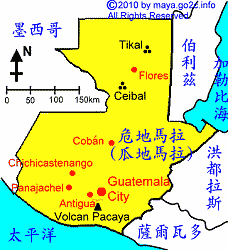
Washing Pacama produced by Incht Manor, the top manor in the Vivetnam fruit producing area of Guatemala
Incht Manor, located on the Guadamara-Vivette Nanguo Plateau, is a farm with a long history, covering an area of 720 hectares and an elevation of about 1500-2000 meters, in which 470 hectares of natural ecological rain forest surrounds the coffee-growing area; it has been operated by the Aguirre family, which has emigrated here since 1874, and began to plant coffee in 1900.
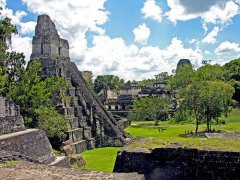
Characteristics and attributes of coffee from eight major producing areas of Guatemala
The Ekatlago Valley is 2000 meters (6500 feet) above sea level, with dense shade and unique ecology. The nearby Fuego volcano erupts, making its coarse, sandy soil rich in a variety of minerals. Temperate sea breezes from the Pacific and a seasonal climate allow coffee in this region to be dried by sunlight and processed according to traditional family methods that have been accumulated over the years. [characteristics]